
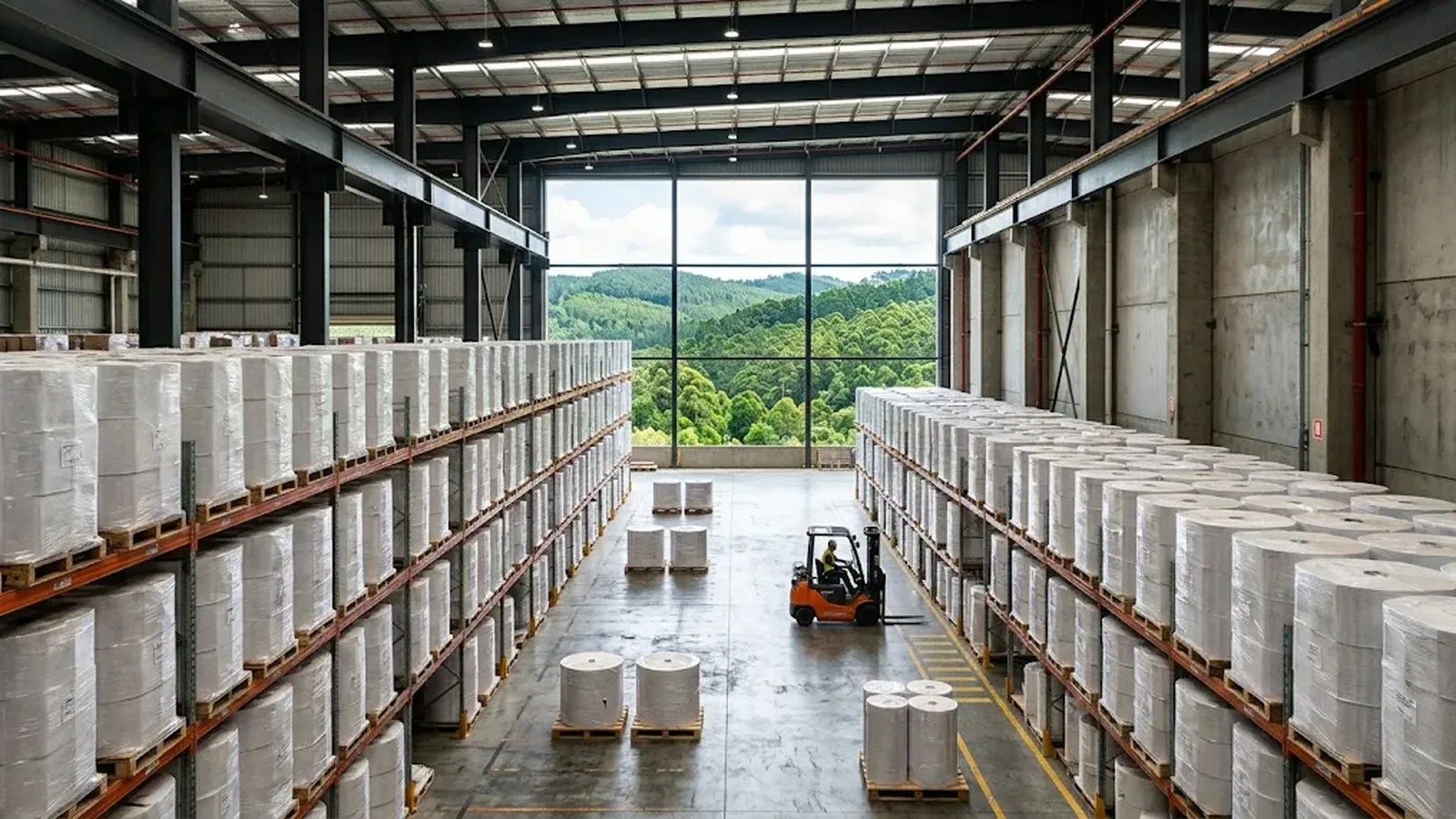
Qualifying an FSC thermal paper manufacturer is a documentation exercise before it is a purchasing one. The manufacturer must hold a valid Forest Stewardship Council chain-of-custody certificate whose scope explicitly covers thermal paper coating and converting; the buyer must verify the certificate number and scope against the FSC public database, agree which claim class applies (FSC 100%, FSC Mix or FSC Recycled), keep the claim alive through every invoice and delivery note under transaction verification, and confirm that the certified fibre story coexists with the chemical specification — FSC governs fibre origin, not the developer chemistry, so the BPA and phenol-free requirements ride on the same specification sheet as separate declarations. The practical audit has five stops: certificate and scope, claim class and on-product labelling rights, transaction documentation, volume reconciliation, and the mill's mixing-control system that keeps certified and non-certified stock separate on the floor.
Sustainability requirements have moved from retail-customer nice-to-have to procurement gate. Supermarket chains, pharmacy groups, hospitality brands and public-sector buyers increasingly specify that receipt and label stock comes from responsibly managed forests — and in paper, that requirement almost always translates into one acronym: FSC, the Forest Stewardship Council, whose chain-of-custody system tracks certified fibre from forest to finished roll.
For a buyer, the difference between a genuine FSC thermal paper manufacturer and a catalogue claim is paperwork that can be verified, not language on a website. The certificate exists in a public database with a scope statement; the claims ride on invoices; the mill can explain how certified and non-certified fibre are kept separate on the coating floor. A supplier who cannot produce those artefacts during the first conversation will not produce them during an audit.
This guide walks the qualification path in order: what FSC certification actually covers in thermal paper, the three claim classes and which one to demand, the on-product labelling rules, the transaction documentation that keeps a claim alive, how FSC sits alongside the developer-chemistry specification, and the audit questions that separate certified mills from claims. Requests that combine several formats can be quoted together; see custom thermal paper programme for the construction options behind each one.
- FSC chain of custody governs fibre origin, not chemistry — the BPA/phenol-free specification is a separate declaration on the same sheet.
- Verify the manufacturer's certificate number and scope in the FSC public database; the scope must explicitly cover thermal paper coating and converting.
- Choose the claim class deliberately: FSC Mix is the volume default for thermal grades, FSC 100% and FSC Recycled command narrower supply and premiums.
- On-product FSC claims and logo use are licence-controlled — a buyer reprinting the logo without the manufacturer's trademark licence breaks the rules, not the intent.
- The claim stays alive through transaction verification: certificate codes on invoices and delivery notes, per lot, for every shipment.
What FSC certification covers in thermal paper
FSC's chain-of-custody system tracks material from certified forests through every processing step to the finished product. For thermal paper the relevant chain runs: certified pulp mill, base-paper mill, thermal coating plant, converting and slitting operation. Every link that makes an FSC claim must itself hold a chain-of-custody certificate — so the manufacturer a buyer sources from needs certification covering its own scope of work, not just a story about its upstream suppliers.
The critical word in the certificate is scope. A mill may hold a valid FSC certificate whose scope covers only some product groups or sites; a certificate that excludes the thermal coating line, or the specific converting plant, does not support a claim on the rolls shipped to the buyer. Verification therefore means three fields, not one: certificate is valid (not suspended or expired), the certificate code matches the entity being quoted, and the scope statement includes the products and site actually supplying the order.
The public database makes this a two-minute check. Certificate holders are searchable by code and company name at the FSC database, with status, scope and expiry attached. Buyers should run the check at qualification and again at contract signature — status changes, and a claim shipped under a lapsed certificate is a claim the buyer cannot pass on.
The three claim classes — and which to demand
FSC claims come in three classes. FSC 100% means every input of virgin fibre originates from FSC-certified forests. FSC Mix means a controlled blend — certified fibre plus material from controlled sources that exclude unacceptable origins. FSC Recycled means all fibre is reclaimed. For thermal grades, FSC Mix is the volume reality: certified pulp supply for the specialty base paper used in thermal coating is thinner than for commodity graphic grades, and most certified thermal programmes run on Mix claims.
The choice matters commercially as well as ethically. FSC 100% and FSC Recycled thermal stock exists but commands narrower supply, longer lead times and a premium; FSC Mix is quotable at normal programme volumes. Retail customers rarely specify the class — they specify 'FSC-certifiable receipt paper' or 'FSC-certifiable label stock' — which leaves the class decision to the buyer, and it should be made deliberately with the manufacturer rather than discovered at the first delivery.
The claim travels to the buyer's customer as an on-product statement or logo. Here the rules tighten: logo and claim use is governed by FSC's trademark standards and requires the manufacturer's licence arrangement. A distributor reprinting an FSC logo onto its own packaging without a licence in place creates a compliance problem for its customer, however well-intentioned — the correct route is always the manufacturer's documented claim plus the buyer's own licence where logo use is needed.
Transaction documentation: keeping the claim alive
A chain-of-custody claim is only as strong as the paper trail behind each shipment. Under FSC's transaction verification requirements, certified product is identified on invoices and delivery notes with the claim statement and the seller's certificate code, lot-identifiable and reconcilable back through the chain. A container of certified rolls arriving without the claim on the shipping documents cannot be sold onward as certified, regardless of what was ordered.
Buyers should therefore fix the documentation format at contract stage: exact claim wording, certificate code placement, and which documents carry the claim (commercial invoice, packing list, and, where required, the FSC transaction-verification data submission). Mills with mature certified programmes produce this documentation by default; its absence from a sample document set is a cheap early signal about the rest of the system.
Volume reconciliation is the audit step that catches the residual failures. Certified output claimed across a period should reconcile against certified inputs purchased in the same period, under the mill's mixing-control system. Procurement teams standardising on one supplier can review our thermal paper jumbo rolls alongside the comparisons in this guide.
How FSC sits alongside the chemistry specification
FSC answers one question — where the fibre came from — and is silent on the chemistry of the thermal coating. The developer system is a separate specification line with its own documentation: the declaration that the grade is free from bisphenol A or uses phenol-free developer chemistry, the migration and compliance data behind it, and the regulatory mapping for the destination market. A certified-fibre roll can carry any developer class; a buyer who qualifies the fibre story and forgets to demand the chemistry paperwork has solved half the compliance brief.
The two specifications should therefore be written on the same sheet and verified with the same discipline: certificate and scope for the fibre, declarations and test data for the chemistry. Where developer compliance is part of the specification, our BPA-free vs phenol-free guide documents the chemistry, the regulations and the paperwork behind each class.
For buyers selling into retail programmes, the combination is now the standard brief: certified fibre for the sustainability policy, documented chemistry for the regulatory policy, and both traceable per lot. Manufacturers who hold both systems together can quote against the full brief; those who hold only one will surface the gap at the customer's audit, not at the quotation.
The qualification audit: five stops at the manufacturer
The audit has five practical stops. First, certificate and scope: valid code in the public database, scope covering the thermal coating and converting site that ships the order. Second, claim class: which of FSC 100%, Mix or Recycled applies to the quoted grade, at what volumes and lead times. Third, on-product claims: what the mill is licensed to state on rolls, labels and packaging, and what the buyer needs on its own licence to extend the claim. Fourth, transaction documentation: sample invoice and delivery note showing claim wording and certificate code per lot. Fifth, mixing control: how the mill keeps certified and non-certified stock separate on the floor, and how volume reconciles.
Commercial expectations should be set in the same conversation. Certified thermal grades can carry MOQ and lead-time consequences — certified base paper is a planned production item, not a spot commodity — and a manufacturer who quotes certified stock at commodity lead times without asking volume questions is the one whose paperwork deserves the closer look. Programme buyers solve this by nominating certified SKUs annually and letting the mill plan certified base-paper purchases around them.
Where a programme needs several formats from one supplier, our POS and receipt paper rolls covers width, core, roll diameter and developer class in a single specification sheet.
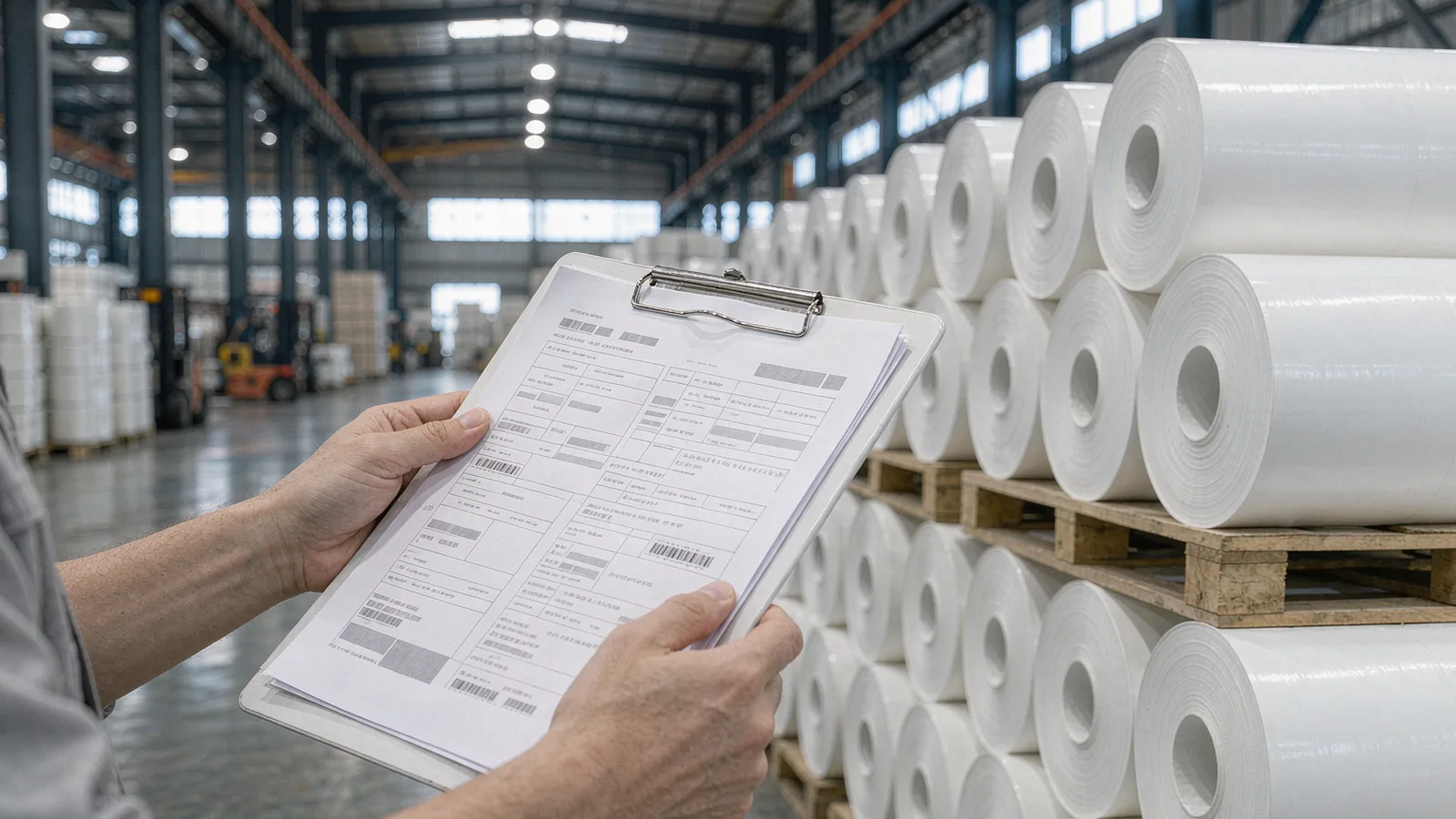
Rule of thumb: certificate, scope, claim class, transaction documents, mixing control — five artefacts at qualification, none of which a catalogue claim can fake.
Frequently asked questions
What makes a thermal paper manufacturer genuinely FSC-certified?
A valid chain-of-custody certificate whose scope explicitly covers the thermal coating and converting site shipping the order, verifiable by certificate code in the FSC public database — plus the internal mixing-control and documentation systems that keep the claim alive on every invoice and delivery note.
What is the difference between FSC 100%, Mix and Recycled?
FSC 100% uses only fibre from FSC-certified forests; FSC Mix blends certified fibre with material from controlled sources; FSC Recycled uses only reclaimed fibre. For thermal grades, FSC Mix is the volume default — certified specialty base paper in the other classes is thinner in supply and carries premiums and longer lead times.
Does FSC certification mean the paper is BPA-free?
No. FSC governs fibre origin only. The developer chemistry — bisphenol A and phenol-free declarations, migration data, regulatory mapping — is a separate specification with its own documentation, and buyers should demand both on the same specification sheet.
Can I print the FSC logo on my own packaging of receipt rolls?
Only under FSC's trademark rules and with the appropriate licence arrangement. The manufacturer's documented claim travels with the product; extending it to your own branded packaging requires your own licence. Reprinting the logo without one creates a compliance problem for you and your customer.
Does certified thermal stock cost more or take longer?
FSC Mix thermal grades are quotable near normal programme volumes with modest premiums; FSC 100% and Recycled classes are narrower and slower. Certified base paper is planned production, so programmes work best when buyers nominate certified SKUs annually, letting the manufacturer schedule certified pulp and base-paper purchases.