
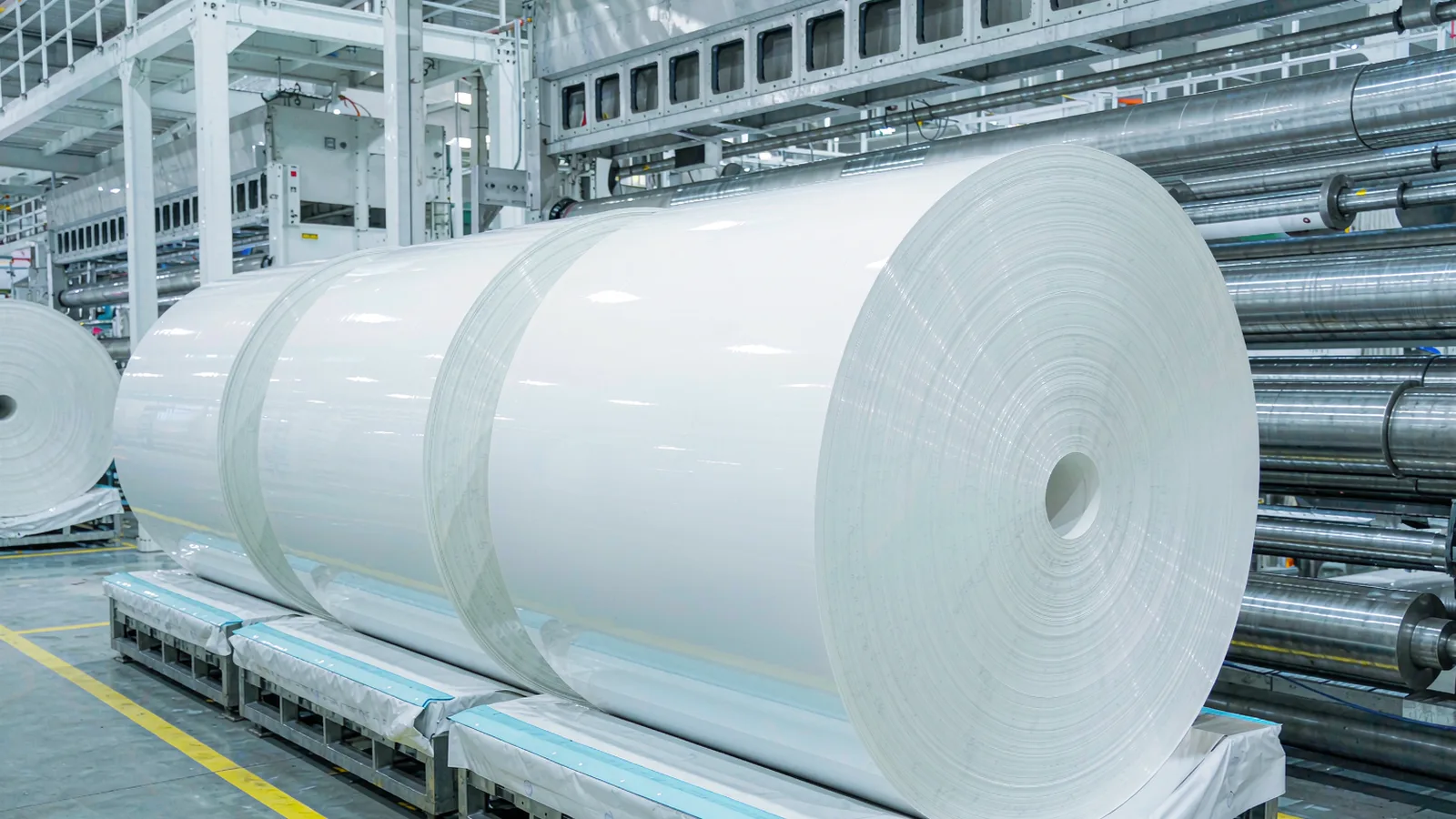
A thermal label jumbo roll is the adhesive-coated labelstock parent roll a converter buys upstream of its own die-cutting, rewinding and finishing — and qualifying the manufacturer behind it is a construction-and-process exercise, not a price comparison. The audit covers five areas: the construction itself (thermal facestock weight, adhesive class matched to the converter's end-use, and a release liner whose caliper and release profile feed consistently through die-cutting); the manufacturer's QC evidence (coat weight control, release force ranges, adhesion and image-density testing reported per batch with COA and SDS); convertability on the converter's own line (matrix stripping, die wear, web tension behaviour across the full width); the commercial frame (MOQ per width, lead time against a rolling forecast, agreed width and core options); and the logistics of moving wide, heavy parent rolls by container without crushed cores or moisture damage. Converters who qualify all five stop paying for finished die-cut labels and start competing on their own converting economics.
Upstream of every die-cut direct thermal label sits a parent roll: facestock, adhesive and release liner laminated at coating width, wound as a jumbo, and shipped to the converter who turns it into finished formats. For a converter, buying that parent roll from a capable manufacturer is the difference between a converting margin and a reselling margin — finished labels carry the maker's overhead in every square metre, while jumbo stock lets the converter monetise its own die-cutting capacity.
The catch is that labelstock is a three-layer system, and a failure in any layer surfaces on the converter's line: an adhesive that bleeds at the die, a liner whose release profile wanders until matrix stripping tears, a facestock whose image density varies across the web. Requests that combine several formats can be quoted together; see custom thermal paper programme for the construction options behind each one.
This guide walks the qualification in the order converters actually audit it: what the construction must specify, the QC evidence the manufacturer should produce per batch, convertability on the die-cutting line, and the commercial and freight frame that decides whether jumbo supply is worth converting in-house at all.
- A label jumbo roll is a three-layer system — facestock, adhesive, release liner — and the qualification must cover all three, not just the thermal facestock.
- Demand batch-level QC evidence: coat weight, release force, adhesion, image density and shelf life, reported on a COA with an SDS for the adhesive system.
- Convertability is proven on the converter's line: matrix stripping, die wear and web tension across the full width are acceptance criteria, not anecdotes.
- MOQ and lead time per width decide whether jumbo supply works — parent rolls are planned production, and the forecast discipline runs both ways.
- Container logistics for wide, heavy parent rolls need engineered packing: core protection, moisture barriers and pallet plans agreed before the first order.
What a label jumbo roll is — and who buys it
The product is precise: direct thermal labelstock, coated at widths of a metre or more, laminated to release liner, wound into parent rolls that weigh hundreds of kilograms. It is not a finished label roll and it is not receipt-grade jumbo paper — the adhesive-and-liner laminate is what makes it labelstock, and that laminate is where the manufacturer's expertise actually lives.
The buyers are converters: die-cutting houses turning jumbo stock into roll and sheet formats for logistics, retail and industrial customers; in-house converting operations at large brands with enough label volume to justify their own finishing lines; and flexible-packaging converters adding direct thermal formats to their range. What they share is a machine park that eats parent rolls — and a margin structure that improves every time upstream cost is replaced with in-house converting.
The manufacturer's side of the deal is construction capability: the ability to hold coat weight, adhesive chemistry and lamination geometry consistent across the full width and across batches. Everything a converter audits downstream is evidence of that upstream consistency.
Construction and QC: facestock, adhesive and release liner
Start with the facestock. Direct thermal facestock is specified by weight (lightweight classes for small-format labels, heavier stock where stiffness and coverage matter), by sensitivity class matched to the end-use imaging requirements, and by coating construction — uncoated for short-cycle duty, top-coated where labels must survive handling, moisture and storage. The facestock specification should arrive as numbers, not adjectives: coat weight in gsm with its tolerance, sensitivity class, image density reading.
Adhesive is chosen for the converter's end-use, not the manufacturer's stock list: permanent systems for carton and location duty, removable where downstream relabelling happens, freezer-grade where goods pass through chill zones. Each class comes with its own application-temperature floor, substrate range and migration profile, and the SDS that documents it. Buyers comparing these specifications can review our top-coated thermal label stock, where basis weight, coating construction and packing are documented per grade before an order is placed.
The release liner is the layer converters underestimate. Caliper affects die-cutting depth; release profile decides whether the matrix strips cleanly at speed or tears mid-run. The manufacturer should publish liner type, caliper and release force range — and the QC evidence per batch should show those numbers were measured, not assumed: coat weight by traverse scan, release force on a standard test, adhesion peel values, image density against a reference, and shelf-life dating for the laminated stock.
Convertability: die-cutting, release behaviour and roll geometry
The acceptance test for labelstock happens on the converter's own line. Matrix stripping is the headline metric — waste removal must run cleanly at production speed across the full web width, batch after batch — but die wear matters just as commercially: an abrasive or inconsistent liner dulls dies early and turns a converting margin into a tooling cost. A serious manufacturer expects to have trial material run on the customer's equipment and will hold back a reference sample from the same batch for comparison if a dispute ever arises.
Roll geometry is the quiet half of convertability. Width and slit plan matched to the die layout, core type matched to the unwinding stand, roll diameter agreed against handling equipment, and tension behaviour specified so the web runs flat from start to end of roll. For production volumes, the same construction logic applies to our thermal paper jumbo rolls, quoted per jumbo roll, slit reel or finished format — the geometry discussion is identical whether the stock is receipt-grade or labelstock.
Consistency is what the converter is really buying. A first pallet that converts beautifully proves the manufacturer can make good labelstock; a QC system that proves batch four converts like batch one is what makes the supply relationship worth signing.
Commercial qualification: documentation, MOQ, lead time and freight
Documentation is the cheapest audit in the process. Every batch should ship with a COA reporting the measured QC values against specification, an SDS for the adhesive system, and — where the converter's customers demand it — declarations covering the relevant food-contact or chemical-regulatory requirements for the destination market. A manufacturer who produces this set by default is telling the converter how the rest of the system is run.
MOQ and lead time decide whether the economics work. Parent rolls are planned production: a manufacturer quoting jumbo stock at commodity lead times without asking forecast questions is selling availability it cannot hold. The healthy frame is a rolling forecast per width, MOQ per slit plan that respects the mill's trim economics, and an agreed surge path for the converter's own peak season — the discipline runs in both directions.
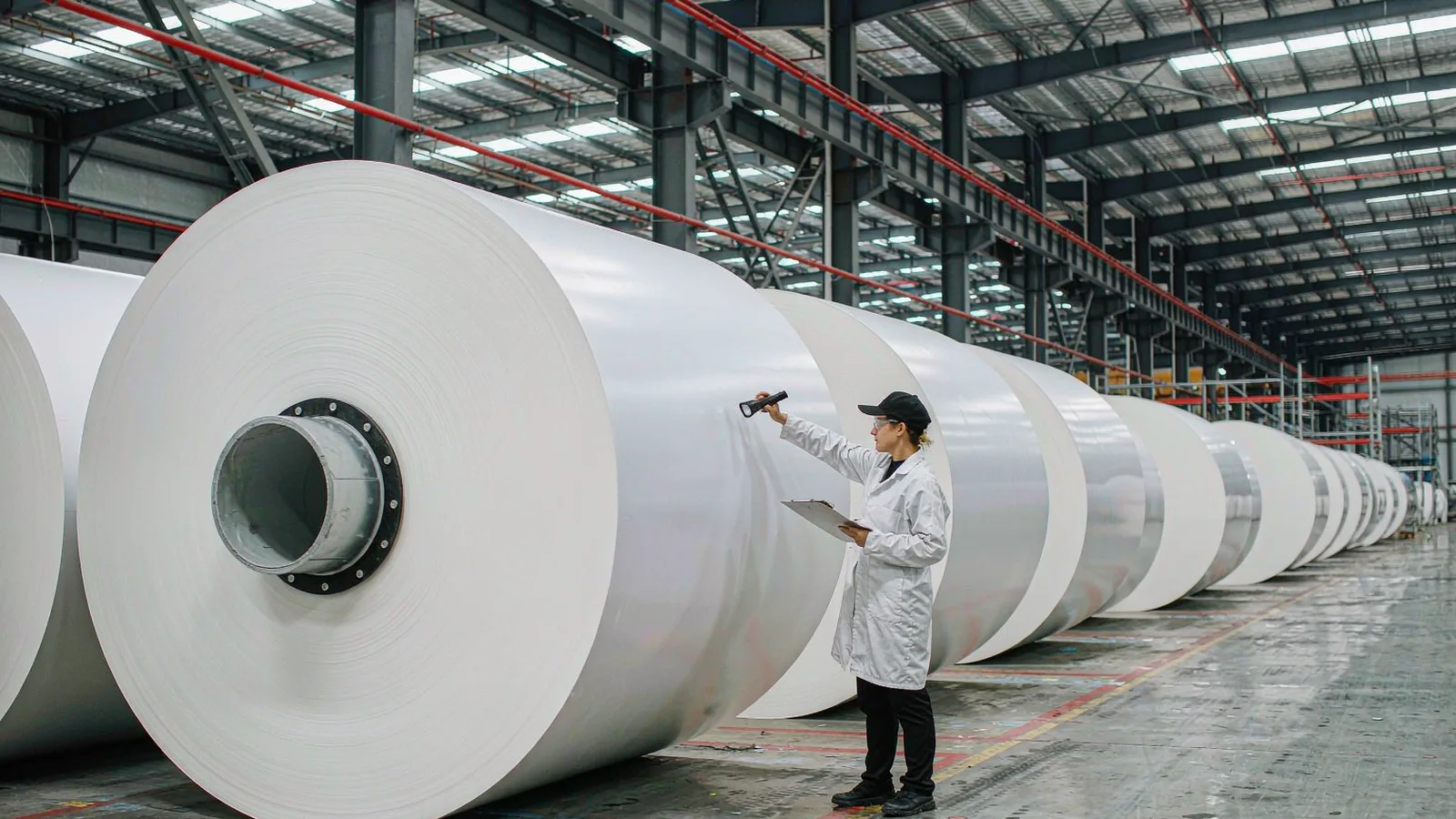
Freight is engineered, not assumed. Wide, heavy parent rolls crush at the core if palletised carelessly and absorb moisture that ruins the laminate, so the packing spec — core protection, moisture-barrier wrapping, pallet plan and container loading diagram — belongs in the commercial agreement. Where container planning is the next step, our export shipping guide covers pallet standards, moisture-barrier packing and the document set for ocean freight. Qualified properly, jumbo labelstock supply converts a converter's biggest upstream cost into its competitive edge.
Frequently asked questions
What is the difference between a label jumbo roll and a finished label roll?
A jumbo roll is the adhesive-coated labelstock parent roll at coating width — facestock, adhesive and release liner laminated and wound large — bought by converters who die-cut and finish it themselves. A finished label roll is die-cut product ready for the end user's equipment, carrying the maker's converting cost in every label.
What QC documents should a labelstock manufacturer provide per batch?
A COA reporting measured values against specification — coat weight, release force, adhesion peel, image density and shelf-life dating — plus an SDS for the adhesive system, and any market-specific declarations the converter's customers require. Batch-level reporting matters more than a single certificate at qualification.
Why does release liner quality matter so much to converters?
Liner caliper controls die-cutting depth and its release profile controls matrix stripping at speed. A liner whose release wanders between batches tears the matrix mid-run and dulls dies early — costs that surface entirely on the converter's line, long after the manufacturer's quote was accepted.
What MOQ should a converter expect for labelstock jumbo rolls?
Per width or slit plan, reflecting the mill's trim economics, and usually agreed annually against a rolling forecast. Parent rolls are planned production, so converters benefit from committing volumes by width and keeping an agreed surge path for peak season.
How are label jumbo rolls packed for ocean freight?
Engineered packing: core protection against crushing, moisture-barrier wrapping for the laminate, and a pallet plan agreed with a container loading diagram. Damage at the core or absorbed humidity ruins material that converted perfectly at the mill, so the packing spec is part of the commercial agreement.