
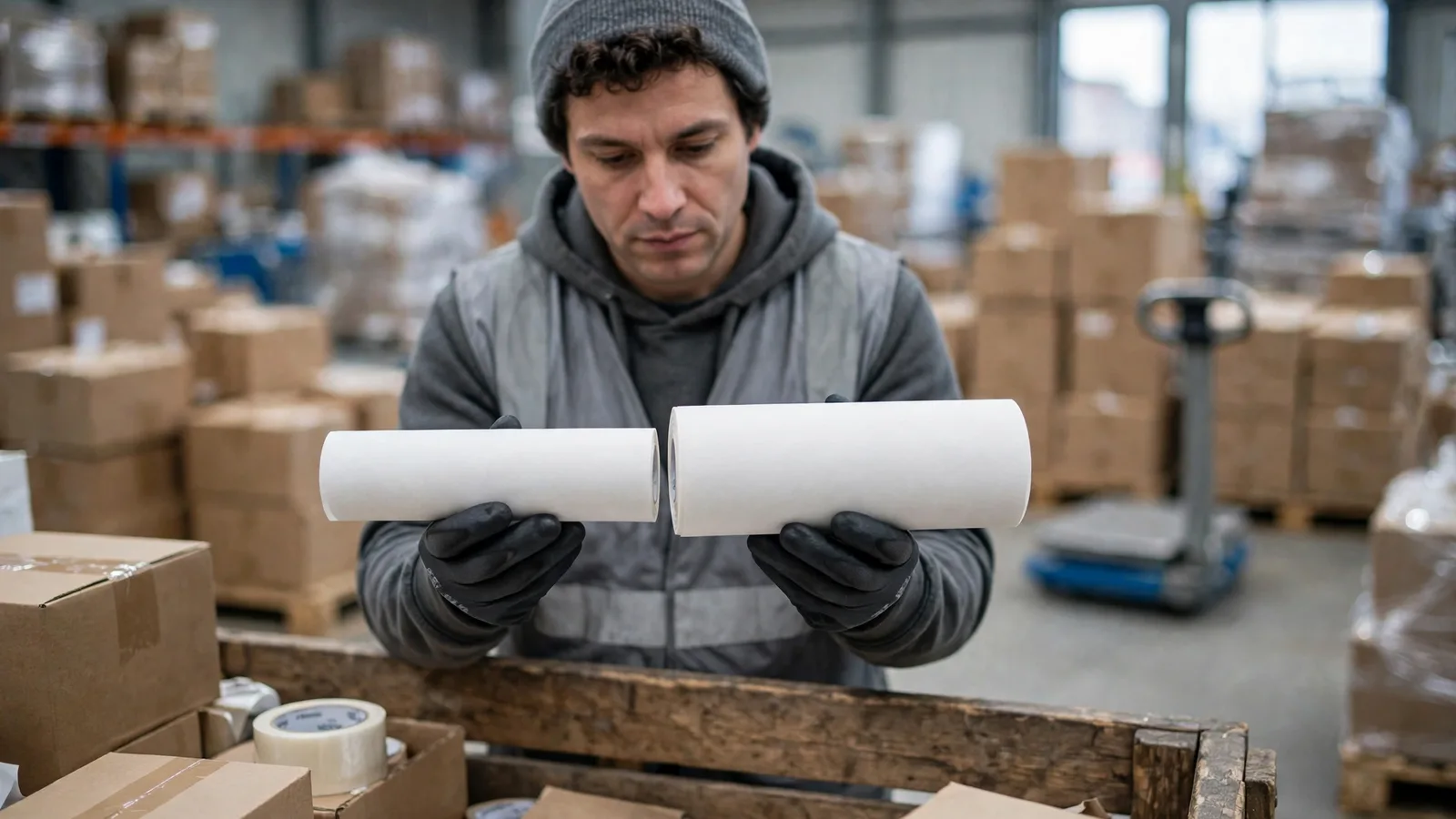
A thermal paper coating factory is the site where base paper is converted into thermal stock — and for an export buyer it is an auditable capability, not just a building. The four things worth verifying on site are the coating kitchen (how formulation batches are mixed, logged and released), coat-weight uniformity (in-line gauging and per-roll records), contamination control (housekeeping, filtration and defect discipline), and the on-site QC lab (the tests that stand behind every certificate). Walk the site in that order, ask to see records rather than equipment alone, and the visit will tell you more about your next three years of supply than any specification sheet.
Every thermal paper specification a buyer signs is, downstream of the chemistry, a promise about a building: the factory where the coating was applied, controlled, measured and packed. Coating is the step that creates the product — base paper arrives as commodity stock and leaves as functional thermal material — so the capability of the coating site is the capability of the supplier. Treating it as an auditable site, rather than an abstraction behind a price list, is what separates programme suppliers from transactional ones.
For production volumes, the same construction logic applies to our thermal paper jumbo rolls, quoted per jumbo roll, slit reel or finished format — the output of the coating site in the form most converters actually buy.
This guide describes the coating factory from the buyer's chair: what the coating operation physically consists of, the four capability areas a site visit should verify, and an audit walk sequence that maps each stop on the floor to a checkpoint a buyer can close in writing. It is deliberately a site-lens: process mechanics, upstream mill sequence and downstream converting equipment are separate subjects with separate guides.
- The coating factory is an auditable capability: coating is the step that creates thermal paper, so site capability is supplier capability.
- The coating kitchen is the heart of the site — formulation batch records, viscosity and temperature logs, and release discipline predict consistency better than machinery lists.
- Coat-weight uniformity must be evidenced, not asserted: in-line gauging plus per-roll records and control charts are what a buyer should ask to see.
- Contamination control separates mills that can hold image density across a long run from mills that cannot — walk the floor and look at housekeeping first.
- An on-site QC lab with named test methods turns certificates into evidence; an audit walk mapped to buyer checkpoints converts a visit into a closed checklist.
The site, not the process: what makes a coating factory auditable
A coating factory, as a site, consists of four functional zones: the coating kitchen where the thermal chemistry is formulated in batches; the coating machine itself, where base paper is metered, coated and dried; the QC laboratory where samples are tested against named methods; and the warehousing and packing zone where finished reels are protected from the moisture and heat that would otherwise degrade them. Equipment lists describe the second zone; the audit value is in the other three.
The distinction matters because two factories with the same coater can deliver completely different consistency. What separates them is how the kitchen logs its batches, how the lab disposes of borderline results, how the floor is kept clean, and how records connect a specific delivered roll to the batch and shift that produced it. Those are site disciplines, visible in an hour's walk, and they are what this guide maps.
The coating kitchen: chemistry control at batch level
Thermal coating begins in the kitchen, where the sensitive layer — developer chemistry, sensitiser, binder, pigments and additives — is dispersed and mixed in batches, then held at specification before it reaches the coater. The audit questions are concrete: how are raw materials lot-tracked on receipt; who signs off a mixed batch against viscosity, solids and temperature targets; how long can a batch hold before it must be re-tested; and what happens to a batch that misses spec — rework under a documented route, or a quiet adjustment?
The strongest signal is the batch record itself. A capable kitchen produces one record per batch with raw-material lot numbers, in-process measurements, the operator and the release decision — and can retrieve the record for any delivered roll within minutes. That retrievability is what turns a future complaint from an argument into an investigation: the roll's coat batch, shift and parameters can be reconstructed from the file.
Kitchen discipline also predicts the behaviour buyers feel downstream. Formulation drift that a batch record would catch shows up months later as sensitivity scatter between delivered lots — the receipt that prints faintly in one carton and crisply in the next.
Coat-weight uniformity: the evidence a buyer should ask to see
Coat weight is the single most consequential controlled variable in the operation: too little and image density suffers, too much and costs rise while curl and scuff behaviour worsen. The capability question is not whether the factory targets a coat weight but how it knows, roll by roll, that it hit it. Mature sites gauge in line — measuring the applied layer across the web and along the roll — and log the profile per roll, not per shift.
Ask to see three artefacts. First, the gauge record for a recently delivered roll, including its cross-profile. Second, a control chart of coat weight across a production week, with the alarm limits drawn and at least one excursion and its disposition visible — a chart with no excursions is a chart nobody records honestly. Third, the reconciliation between coat-weight records and the retention or sensitivity results from the QC lab, which demonstrates that the two departments actually talk.
For buyers comparing this capability across suppliers, our top-coated thermal label stock documents the coating construction behind each grade, where basis weight, coating construction and packing are recorded per grade before an order is placed — the same evidence chain an audit verifies in person, extended to the product level.
Contamination and cleanliness control on the floor
Thermal coating is a surface product, and surfaces punish dirt. Fibre lint, dried coating specks, airborne dust and carryover between batches all land on the web and become defects: voids in the image, spots that reject at converting, spots that survive to the receipt. Housekeeping is therefore not cosmetic — it is the visible residue of a working contamination-control system.
The walk-through tells the story quickly. Look at the floor under the unwind and rewind stands, the condition of the coating pan and its filtration, whether operators wear gloves where finished web is touched, how defects found at inspection are marked and mapped, and whether the roll-inspection station has light conditions that could actually catch a faint defect. A clean floor with a documented defect map is a site that knows its own process; a tidy-for-visitors floor with no defect records is the opposite.
Cleanliness discipline extends to the warehouse, where finished reels must be held in moisture-barrier wrap and away from heat — the same chemistry that images the paper will slowly image it in storage if the environment allows. End-of-audit, the contamination question folds into the packaging question: how the site protects its work after the coater is part of the same capability.
The on-site QC lab: tests behind the certificate
The lab is where site capability becomes paper evidence. A functional thermal QC lab runs, at minimum: basis weight and caliper; coat weight by gravimetry or titration; sensitivity and activation energy against a reference; dynamic image density on an operating print head fixture; and accelerated ageing for image retention. Ask which methods are in-house and which are sent out — a site that sends its core tests away cannot catch its own drift at production speed.
The audit test for a lab is simple: hand the lab a delivered roll number and ask for its full test trail. A capable lab produces the COA, the sensitivity scan, the retention result and the coat-weight record in one response — test methods named, limits stated and results traceable to the batch. The same request made to a weak site produces a certificate without the underlying records, a paper trail that starts at the end rather than the beginning.
Capacity signals and the audit walk, mapped to buyer checkpoints
Capacity claims deserve the same evidence discipline as quality claims. The signals that matter are scheduled coating hours versus available hours, the number of active coating heads and their widths, changeover frequency between grades, and the order backlog the planning office is actually working against. A site running single-shift with a full order book and a site running three shifts with slack capacity will both say 'yes' to a volume enquiry — the difference appears in the lead time you get in month three.
Requests that combine several formats can be quoted together; see our custom thermal paper programme for the construction options behind each one, with capacity and lead time documented against the confirmed specification rather than assumed.
The table below sequences a half-day walk — kitchen, coater floor, lab, warehouse — with the checkpoint each stop should close. Run the same sequence by document when travel is not possible; the checkpoints are identical.
| Audit stop | What to examine | Buyer checkpoint closed |
|---|---|---|
| Coating kitchen | Batch records, raw-material lot tracking, release discipline | Chemistry control is logged and retrievable per batch |
| Coater floor | In-line coat-weight gauging, control charts, excursion disposition | Coat-weight uniformity is evidenced per roll, not asserted per shift |
| Inspection station | Defect marking, defect maps, lighting, operator handling | Contamination control is a working system, not housekeeping theatre |
| QC laboratory | Named test methods, in-house coverage, per-roll test trail | Certificates trace to underlying records for any delivered roll |
| Warehouse & packing | Moisture-barrier wrap, storage temperature, pallet standards | Finished stock is protected after the coater |
| Planning office | Scheduled hours, backlog, changeover pattern | Quoted lead times are backed by real schedule headroom |
Run the sequence in one order: kitchen, coater floor, inspection, lab, warehouse, planning. Closing checkpoints out of order invites the site to prepare for the next stop before you have seen the last one.
From audit findings to a programme decision
An audit closes when its findings convert into a specification decision. Where the walk confirmed kitchen discipline, evidenced coat weight and a lab that traces, the site's quoted construction can be taken at face value and programmed; where a checkpoint could not be closed, the gap becomes a corrective question in the RFQ rather than a surprise after the first delivery. Either way, the visit has done its job: it moved information from the supplier's side of the table to yours.
The same evidence logic extends to the product you buy. Where image life is the deciding factor, our top-coated vs non top-coated guide compares the two constructions on retention, cost and machine behaviour — the construction axis the QC lab's ageing and sensitivity data should settle before the commercial axis is negotiated.
Frequently asked questions
What is a thermal paper coating factory?
It is the production site where base paper is coated with the thermal-sensitive chemistry and converted into thermal stock — comprising the coating kitchen, the coating machine, the QC lab and the packing operation. For buyers it is best understood as an auditable capability: the site whose disciplines decide the consistency of every roll delivered.
What should I check first when auditing a coating factory?
Start in the coating kitchen, not at the coater. Batch records, raw-material lot tracking and release discipline predict long-run consistency better than equipment lists, and kitchen drift is the usual root cause of the sensitivity scatter buyers see between delivered lots months later.
How do I verify coat-weight uniformity as a buyer?
Ask for three artefacts: the in-line gauge record for a recently delivered roll, a week of control-chart data with alarm limits and at least one recorded excursion, and the reconciliation between coat-weight records and the lab's sensitivity results. Asserted uniformity without records is not evidence.
Which tests should the factory's QC lab run in-house?
At minimum: basis weight and caliper, coat weight, sensitivity and activation behaviour against a reference, dynamic image density on a print-head fixture, and accelerated ageing for image retention. A site that sends its core tests to outside laboratories cannot catch its own drift at production speed.
How is a factory audit different from reading specification sheets?
A specification sheet states targets; an audit verifies the system that hits them. The audit's value is traceability — the ability to reconstruct any delivered roll back to its coating batch, shift and test records — which no datasheet can demonstrate and which predicts how complaints will be handled before any complaint exists.