
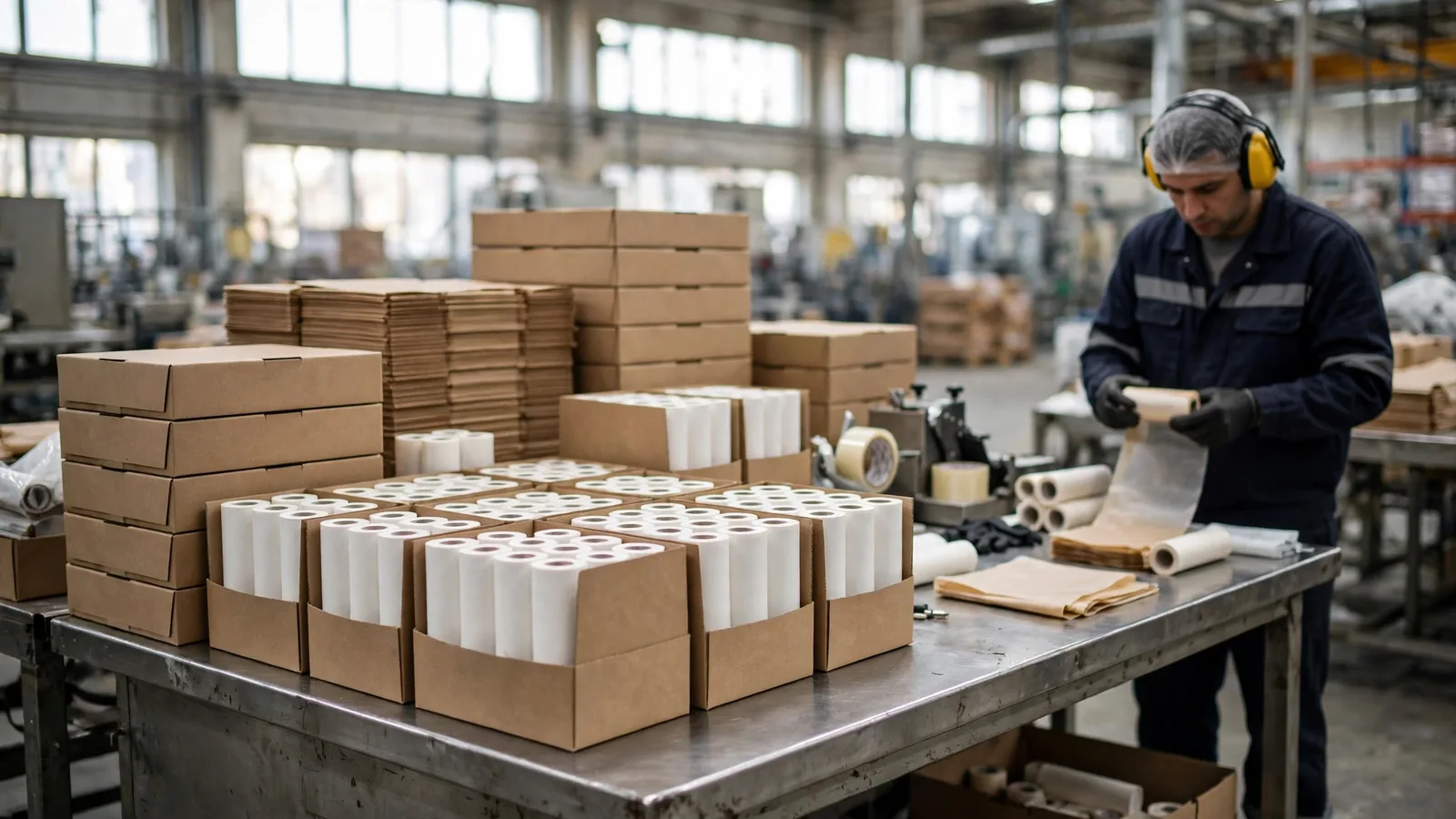
A private label thermal paper rolls programme succeeds or fails on the details around the roll, not just inside it. The brand lives on four layers — the carton, the wrapper, the core print and the roll face — each with its own artwork, MOQ and obsolescence rules. The paper inside must carry documented developer-class compliance (BPA-free or phenol-free construction, REACH documentation) because the distributor's brand, not the mill's, answers the end customer's compliance question. Programme economics are decided by packaging format, pallet utilisation and freight class as much as by the per-roll price. Converters that structure all four layers at the outset — artwork, MOQ, compliance paperwork and export packing — get a programme that scales across SKUs without re-negotiating every order.
Private label is how converters, distributors and office-products brands turn a commodity into an asset: the customer reorders the brand, not the paper. But an own-brand roll programme is a bigger commitment than buying stock rolls and applying a sticker. The brand touches the carton, the wrapper, the core and sometimes the roll face; the compliance story must hold under your name; and the packaging decisions lock in freight economics for the life of the programme.
The programmes that work treat those layers as one specification from day one. Where a programme needs several formats under one brand, our custom thermal paper programme covers width, core, roll diameter, developer class and packaging options in a single specification sheet — the same document the artwork and MOQ schedule hang from.
This guide walks through the four decisions that structure a private label roll programme: what the brand physically covers, the artwork and MOQ mechanics, the compliance and documentation burden that transfers with the brand, and the packaging and freight choices that decide whether the programme is profitable at container scale.
- The brand covers four layers — carton, wrapper, core print and roll face — each with its own artwork, MOQ and revision control.
- Agree one specification sheet per format (width, core, diameter, developer class, packing) and hang every SKU and artwork revision from it.
- Compliance paperwork transfers with the brand: developer-class documentation and REACH support must be issued under your brand's name, not left implied.
- Packaging format and pallet utilisation decide programme economics at container scale more than the per-roll price does.
- Lock artwork revision rules and obsolescence terms in the supply agreement before the first print run, not after the first reprint.
What the brand actually covers: four physical layers
Layer one is the carton: the outer box the distributor's customer sees on the shelf and in the warehouse. It carries the brand, the format information (size, core, quantity) and often a barcode the distributor's own system reads. Carton artwork is typically printed per format, which means a ten-SKU programme is a ten-carton artwork set, each with its own minimum order quantity and its own revision risk when a spec changes.
Layer two is the roll wrapper — the printed film or paper around each roll — and layer three is the core print, where the brand or a reorder prompt appears on the inside of the core as the roll is consumed. Layer four, used selectively, is the roll face itself: a pre-printed logo or message on the outer turns of the paper, visible on the dispenser. Each layer moves independently through the artwork cycle, and a programme that treats them as one undifferentiated 'branding' line item will discover at the packing stage that one layer's MOQ does not fit the order.
The formats the programme covers decide which layers matter. High-turn POS formats justify full four-layer branding: our POS and receipt paper rolls run across the format range most own-brand programmes start with, from 57 mm terminals to 80 mm retail rolls. Slow-moving specialty formats often justify carton-only branding, where the wrapper stays generic and the MOQ burden drops accordingly.
Artwork, MOQ and lead-time mechanics
Artwork is the programme's currency, and it needs revision control like any other document. Every artwork carries a version; every order references a version; and the supply agreement states what happens when a revision arrives mid-production — how much WIP is re-workable, what obsolescence stock the distributor accepts, and who pays for the changeover. Programmes that skip this discipline meet their first surprise at the first spec change.
MOQs follow the print process behind each layer. Carton print runs in thousands of boxes; wrapper film runs in kilometres; roll-face pre-print consumes thermal stock per design. The realistic MOQ conversation is therefore per layer, per format — and a supplier who quotes one blended MOQ for the whole programme is hiding the constraint that will surface at the third order. Converters feeding their own downstream formats can side-step part of this by buying parent stock and converting under the brand themselves: our thermal paper jumbo rolls supply that model, with the mill's construction data carried through to the converter's own brand.
Lead time is where private label differs most from stock supply. Branded production sequences artwork approval, plate or cylinder preparation, print, and then conversion — so the first order carries setup time the reorder cycle does not. Plan the launch order against a longer clock, and hold safety stock through the artwork-transition windows when revisions land.
Compliance and documentation under your own brand
When rolls carry your brand, your brand answers the end customer's compliance question — the mill's name may never appear on the product. That transfers a real documentation burden: the developer-class story (BPA-free or phenol-free construction), the REACH position for European retail channels, and food-contact declarations where rolls serve hospitality kitchens. The supply agreement should commit the mill to issuing that paperwork referencing your brand and your batch codes, on request and on a defined turnaround.
Batch traceability is the other half of the transfer. End customers increasingly ask own-brand suppliers for batch-level documentation — a COA tied to the delivery note. That only works if the mill's batch records map cleanly onto your carton codes, which is a data question to settle at programme setup, not at the first audit. Where developer compliance is part of the specification, our BPA-free vs phenol-free guide documents the chemistry, the regulations and the paperwork behind each class — the same documents a private label programme must be able to issue under its own name.
The reputational logic is straightforward: the distributor's brand absorbs the end customer's complaints, so the distributor's audit rights over the mill — factory visits, batch sampling, change-notification clauses — are part of the brand's insurance policy, not an optional extra.
Packaging, freight and programme economics
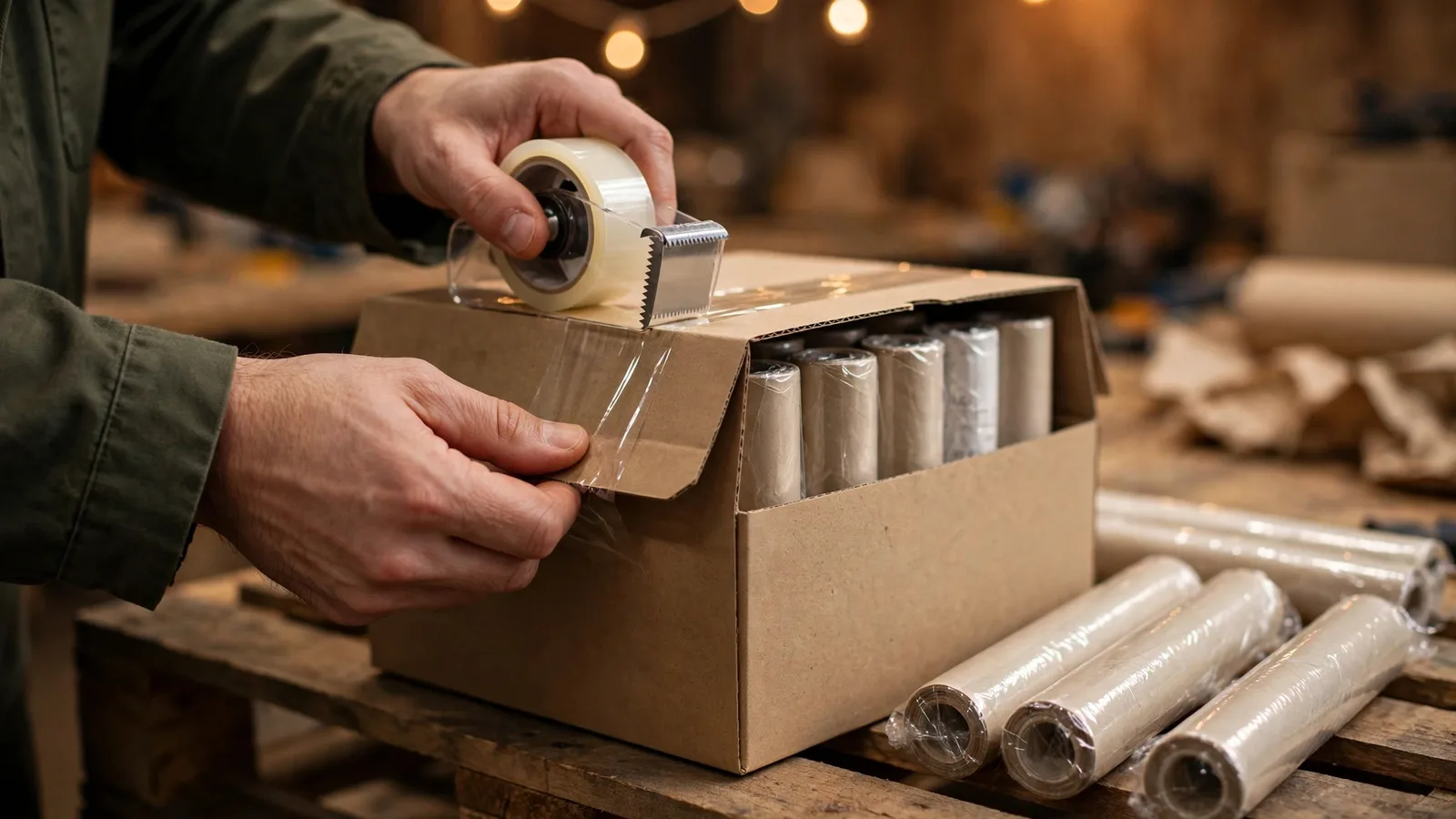
Packaging decisions compound across the programme. Carton count per pallet, pallet height, container fill and moisture-barrier wrapping determine how many rolls a container actually delivers — and a programme that optimises the roll price but ships air pays for it every sailing. Own-brand cartons should be designed against the pallet, not the other way round: agree carton dimensions and pallet pattern before carton artwork is printed, because reprinting boxes is the most expensive artwork revision there is.
Freight class follows the product. Thermal rolls are light for their volume, which makes volumetric weight the binding constraint on airfreight and container fill the binding constraint on ocean freight. This is where the packaging layer and the commercial layer meet, and where programme economics are won or lost: our export shipping guide covers pallet standards, moisture-barrier packing and the document set for ocean freight — the same packing discipline a branded programme inherits from the stock programme.
The last economic input is the reorder cycle. A private label programme earns its keep on repeats, so the honest model prices the programme over a year of orders — amortising artwork, plates and setup across the planned volume — rather than on the first order alone. Suppliers who publish grade-level test data support that model: our POS and receipt paper rolls range is quoted with the construction data behind each grade, so reorder comparisons run on measurements, not catalogue claims.
Frequently asked questions
What MOQ should we expect for private label thermal rolls?
Per layer and per format, not one blended number. Carton print, wrapper film and roll-face pre-print each carry their own minimum run, so a realistic quote itemises MOQ by branding layer. Carton-only branding on slow-moving formats keeps the MOQ burden far below full four-layer branding.
Who holds the compliance documentation on an own-brand roll?
The distributor's brand answers the end customer, so the supply agreement should commit the mill to issuing developer-class, REACH and food-contact documentation referencing your brand and batch codes, on a defined turnaround. Batch traceability mapping the mill's records to your carton codes should be set up at programme launch.
Can artwork be changed after production starts?
The supply agreement should define it: how much work-in-progress is re-workable, what obsolescence stock the distributor accepts, and who bears the changeover cost. Without revision-control terms, the first mid-production artwork change becomes a negotiation instead of a process.
How does private label affect container loading and freight cost?
Thermal rolls are light for their volume, so container fill and volumetric weight dominate freight economics. Carton dimensions and pallet patterns should be agreed before carton artwork is printed, and moisture-barrier packing specified for ocean freight.
Is roll-face pre-printing worth the extra MOQ?
For high-turn POS formats it usually is — the printed face is visible on the dispenser and reinforces the reorder brand at the point of use. For slow-moving specialty formats, carton-only branding typically delivers the brand presence without the per-format MOQ burden.